Burnout Doesn’t Come From Working Too Much
Burnout is not always a quantity problem. Sometimes the mind cannot rest because the work has no finish line.
It comes from working without a way to know when enough is enough. I wasn't overworked. Not technically. The hours weren't brutal. The work wasn't impossible. Nobody was asking me to do something unreasonable. And yet, at some point during that period, I remember sitting at my desk — pandemic, home, nowhere to go — feeling like everything around me was collapsing. Meetings overlapping with other meetings. Work I needed to prepare sitting untouched because the day had been swallowed by other things. A list of things I hadn't finished growing faster than the list of things I had.
I was managing five teams simultaneously. Mature teams that knew what they were doing. New teams that had never worked Agile before and weren't sure they wanted to. Different technologies I wasn't familiar with. Products I was still trying to understand. People I had just met.
Nobody forced me into it. I had assumed the new, smaller teams wouldn't need much from me. That assumption was wrong — some weeks, the smallest teams consumed more of my time than the experienced ones. I was waiting for my new colleague to arrive like I was waiting for air.
The day never ended
The work itself wasn't the problem. The problem was that I had no way to know when the day was done. Every evening, something was still hanging — a conversation I hadn't finished, a process I wanted to improve, an idea that had surfaced at 4pm and hadn't been resolved. The boundary between work and not-work had dissolved completely. Partly because of the pandemic — the office was the living room, the commute was ten steps, and the concept of "leaving" had lost all meaning. But mostly because I had no internal signal for done.
A developer can look at a completed ticket and know: that's done. A designer can look at a delivered mockup and know: that's done. I was managing five teams across different seasons, different contexts, different challenges — and I had no scorecard that told me whether the day had been a success or not.
So my brain kept the file open. Every night. Every weekend. Every quiet moment that should have been rest became a background process running through everything I hadn't finished, everything I should have done differently, everything waiting for tomorrow. That's not overwork. That's a navigation problem.
What burnout actually is
We talk about burnout as if it's a quantity problem. Too much work. Too many hours. Too much pressure. Sometimes it is. But more often — especially for people in complex, cognitive, coordination-heavy roles — burnout is a clarity problem. It's what happens when you work hard without a reliable way to answer the question:
was today enough? Without an answer to that question, the mind doesn't rest. It monitors. It scans. It keeps the engine running because it doesn't know when it's safe to stop. The exhaustion isn't from the work. It's from the constant, unresolved uncertainty of never knowing
I had no metric for a successful day. So every day ended in ambiguity. And ambiguity, sustained over weeks and months, becomes burnout.
The moment of relief
The day my new colleague arrived, I felt something shift immediately. Not because the workload disappeared overnight. It didn't. But because the load was now shared — and shared by someone experienced enough to take real ownership. Within days, he had absorbed several teams and their responsibilities.
The relief was physical. The kind you feel in your shoulders. Looking back, I understand now what that relief was really about. It wasn't just the reduced workload. It was that for the first time in months, I could see the edges of my responsibility. I knew what was mine and what wasn't. I had a boundary — and a boundary, however basic, is a form of clarity.
Clarity is what I had been missing the entire time.
What I would do differently
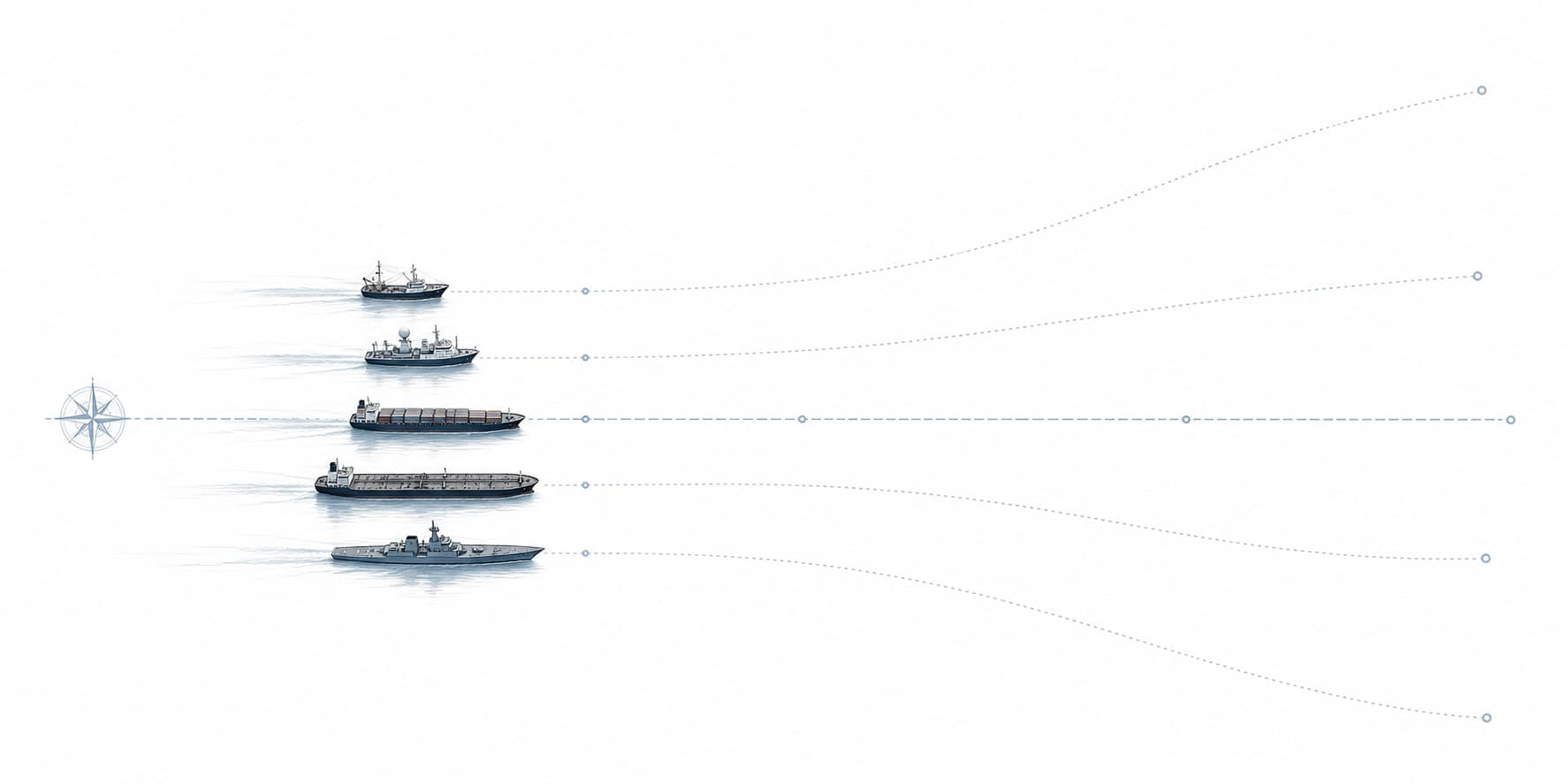
I've thought about this often since then — what would have changed if I had been navigating that period with Compass rather than without it. The answer isn't a productivity system. It isn't time-blocking or a better task manager or a morning routine. It's three concrete things:
First — name the season you're in before you measure anything. That period was a season of high coordination and low visibility. I was managing complexity across multiple contexts simultaneously, with incomplete information and new relationships. That's a specific kind of season — and it has its own definition of success.
In a speed season, a good day means features shipped. In a research season, a good day means understanding deepened. In a coordination season — which is what I was in - a good day means the right conversations happened, blockers were removed, and teams moved forward even when I felt like I hadn't produced anything tangible.
I was measuring a coordination season with a delivery scorecard. No wonder every day felt insufficient. Second — define what a successful day looks like before the day starts. This is the simplest and most underused practice I know. Not a to-do list. Not a calendar. One answer to one question, written down in the morning:
What would make today a good day? Not a perfect day. Not a heroic day. A good enough day. Three things, maximum, that if done would let you close the laptop and feel the day was complete. Without this, the brain has no finish line. And without a finish line, it never stops running.
Third — close the day deliberately. A simple review at the end of the workday. Five minutes. Three questions: What did I actually do today? What's genuinely unfinished versus what can wait? What do I need to remember for tomorrow? The act of writing this down — physically externalizing what the brain is holding — is what allows the mental file to close. The brain keeps things in working memory because it doesn't trust they'll be remembered. Give it a place to put them, and it lets go.
During the pandemic, when the walls of home and work had collapsed entirely, this practice would have been the boundary I was missing. Not a physical boundary — a cognitive one. A ritual that told the brain: this is where today ends.
The question worth asking
Burnout isn't always a sign that you've been working too hard. Sometimes it's a sign that you've been working without a way to know when you've worked enough. The difference matters — because the solutions are completely different. If the problem is quantity, the answer is less. But if the problem is clarity, the answer is a different kind of scorecard. One that matches the season you're in. One that gives you a finish line each day. One that lets the work end when the day ends.
Before you ask yourself how to work less — ask yourself this: Do I have a clear definition of what a successful day looks like in the season I'm currently in? If the answer is no, that's where to start. Not with a new productivity system. Not with a better calendar.
With a compass. Have you ever experienced burnout that wasn't really about the hours?
Not sure which navigation mode fits your current season?
The Compass Navigation Diagnostic helps you identify the Primary and Secondary Vessels that best reflect the work you are navigating today.
Start the Compass Navigation Diagnostic