Your Mind Left the Meeting 20 Minutes Ago. Here’s What I Did About It.
Meetings become expensive when the room is used to create context that should have existed before everyone joined.
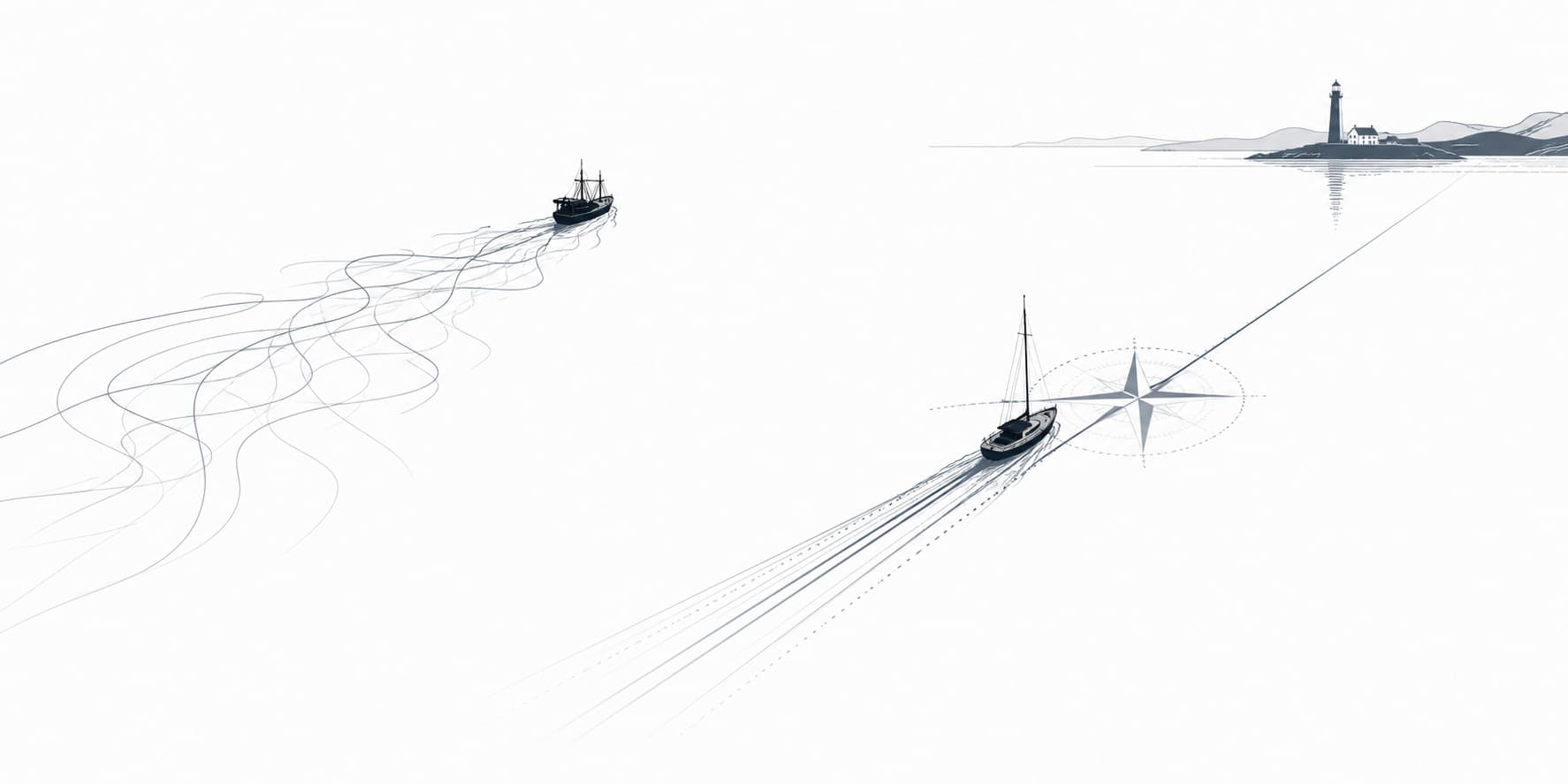
How I stopped running meetings that nobody needed — and started running ones that actually work. You know the feeling. You're sitting in a meeting. Someone is talking. The agenda is on the screen. And somewhere around minute twenty, you realize your mind has quietly left the room.
It's not solving the problem being discussed. It's drafting a response to an email you haven't sent yet. It's thinking about the decision you need to make before end of day. It's anywhere but here. And then you feel a small wave of guilt — because you're supposed to be present, engaged, contributing.
But here's what I've learned after years of sitting in those rooms: the guilt is misplaced. Your mind didn't leave because you're disengaged. It left because the meeting stopped being relevant to you — and your brain, which is remarkably good at optimizing for what matters, went looking for something better to do.
I've been there. I've suffered through it alongside people just like me. And at some point I made a decision: my meetings are not going to look like that.
The Problem Isn't the Meeting. It's the Assumption Behind It.
Most meetings are built on a silent assumption: that the room is the place where alignment happens. Everyone gathers. Topics are introduced. Discussion unfolds. Conclusions are reached — hopefully — before the calendar block ends. The problem is that this model is extraordinarily inefficient for anything that requires thinking, context, or preparation. When you walk into a meeting cold, you spend the first fifteen minutes just catching up to the people who already know the background. And if those people are also catching up to each other, you spend thirty minutes circling a problem that a well-written document could have resolved in ten minutes of async reading.
I've watched meetings drift for forty-five minutes on topics that had a clear answer — an answer that existed in someone's head, but hadn't been written down anywhere that others could engage with before the session. That's not a meeting. That's a performance of alignment. Expensive, time-consuming, and often inconclusive.
What I Changed — and Why It Worked
The shift came from studying how Matt Mochary and his team run meetings. The core idea is simple but counterintuitive: the meeting is not where alignment happens. The meeting is where unresolved alignment gets finalized. Almost everything else happens before, in a shared document.
Here's how I implemented it in practice: Before the meeting, a document is created. Not an agenda — a working document. It contains the context, the open questions, the decisions that need to be made, and any dependencies or risks that others need to know about. It's created early enough that people have time to actually read it, not five minutes before the session starts.
People read and engage async. Instead of walking into the room cold, participants read the document in advance and leave their questions, concerns, or input directly in the document. Not in a DM. Not in a side chat. In the document, where everyone can see it. Most things get resolved before the meeting starts. This is the part that surprised me most the first time. When questions are written down and visible, people answer them.
When a concern is articulated clearly, the person who has the answer responds. When a decision is straightforward, it gets made in the document — without anyone needing to be in the same room. The live session covers only what's left. By the time we meet, the agenda is not "let's discuss the project." The agenda is a short list of specific threads that genuinely needed a live conversation — because they were ambiguous, contentious, or required a real-time exchange to resolve. Each topic has a time cap. Decisions are captured with a named owner and a deadline.
What This Looks Like in Practice
On one project where I implemented this, our planning sessions went from ninety-minute discussions that often ended without clear conclusions, to forty-five minute sessions where we walked in knowing exactly what needed to be decided and walked out with every decision documented.
The first time we ran it, someone said: "I actually read the document before this and I already knew the answer to my question before we started." That's the point. The document does the heavy lifting. The meeting handles the exceptions. There's also a discipline that comes with this model that I didn't expect: when you know your questions need to be written down, you ask better questions. When you know your input will be visible to everyone, you think before you write. The async format creates a kind of accountability that live discussion often lacks — because in a meeting, an unclear question disappears into the conversation. In a document, it stays there, waiting for an answer.
The Rules I Don't Compromise On
After implementing this across multiple teams, a few principles have become non-negotiable: Every open item has a named owner. Not "the team will handle it." A person. Named. Accountable. If something was already answered in the document, I redirect people to the document.
Every time. Without exception. This is the habit that makes the system self-reinforcing — because people learn that the document is the source of truth, not the meeting. If a thread gets no response in twenty-four hours, it's resolved with a written assumption. Not "we'll discuss it live." A written assumption that everyone can see and contest. Silence is not an excuse to expand the meeting agenda.
The live session has a strict time cap per topic. Ten minutes. If a topic needs more than ten minutes, it usually means the async preparation wasn't thorough enough — and that's a process problem to fix before the next session, not a reason to let the meeting run long.
The Meeting Your Team Actually Needs
I'm not arguing that meetings are bad. Some conversations genuinely need to happen in real time — when the stakes are high, when the topic is emotionally charged, when the nuance of a live exchange matters. But most of what fills a typical meeting agenda doesn't meet that bar.
Most of it is information sharing that could be a document. Questions that could be answered async. Decisions that could be made by one person with the right context, not by a room of twelve people who are half-present. The meeting your team actually needs is shorter than you think, more focused than it usually is, and attended only by the people for whom it's genuinely relevant.
Everything else belongs in the document.
Try This
For your next cross-team meeting, create the working document 48 hours in advance. Ask people to read it and leave their questions as comments before the session. Then watch what happens. My guess? More than half of the meeting will disappear before it starts. And that should make us uncomfortable.
Because if a meeting can disappear after people read a document, maybe it was never a meeting. Maybe it was just a very expensive way of forcing people to think out loud at the same time. So here's the question: How many of your recurring meetings would survive if every participant had to answer one question before joining:
"What exactly needs to be decided live that could not have been resolved in writing?" I suspect many calendars would suddenly look a lot emptier. And a lot more honest. Are most meetings a collaboration problem — or a documentation problem disguised as collaboration?
Not sure which navigation mode fits your current season?
The Compass Navigation Diagnostic helps you identify the Primary and Secondary Vessels that best reflect the work you are navigating today.
Start the Compass Navigation Diagnostic