Two strong teams. One stalled launch.
Platform protected reliability. Growth pursued speed. Both were right in isolation, but nobody defined success together.
Kestrel is fictional. Names and details are invented to protect people; the alignment pattern reflects real organizational behavior.
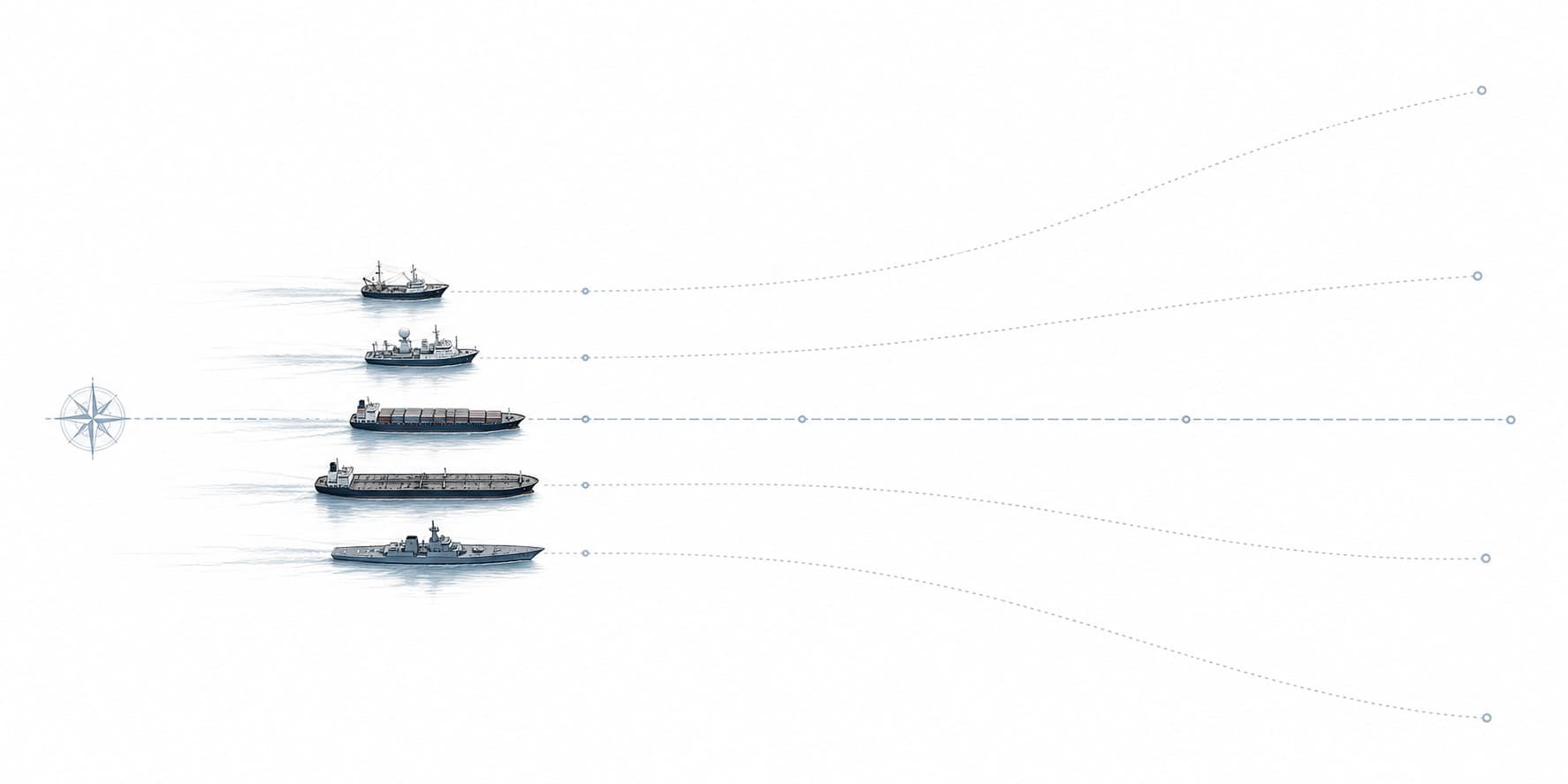
The setup
Imagine two exceptionally strong teams pulling the same load. Their strength helps only when they pull in the same direction, at the same rhythm. Otherwise, the effort is real and the movement is small.
Kestrel was a growing software company with two excellent teams. Platform was careful and methodical, proud of eighteen months without a critical incident. Growth ran experiments weekly and turned ideas into revenue quickly.
When leadership planned a flagship product, putting both teams on it felt like the obvious choice. Stability and speed should have complemented each other.
What happened
From the first week, Platform wanted architecture reviews before release. Growth wanted a prototype in users' hands within ten days. Platform measured success by what did not break; Growth measured it by what launched.
Every planning meeting became a negotiation, every decision needed two approvals, and every release left one team feeling slowed down and the other feeling rushed. Nobody was lazy or careless. Both teams were working hard.
Four months in, the product was behind schedule. Two senior engineers asked to transfer. The Growth lead captured the frustration: separately, they had been among the company's best teams; together, they had become its slowest.
The diagnosis
Kestrel did not have a talent problem. It had a direction problem. Platform had been calibrated as a Tanker, where reliability comes first. Growth had been calibrated as a Fishing Vessel, where fast learning from users matters most.
Both approaches were sensible for their original work. Nobody had decided which kind of work this new product needed now, or what a good month would look like for both teams together.
What a Compass would have changed
Before the first sprint, leadership could have named the season: an early product closer to a Fishing Vessel, with explicit limits on what Platform needed to protect. Both teams could then agree on one direction for the quarter, one definition of a good month and the work they would deliberately defer.
That would not require a reorganization or a new process. It would require a shared north before the pulling started.
The navigation note
Combining strong people does not automatically multiply results. When teams optimize for different outcomes without a shared direction, their strength can cancel out.
The broken compass was not either team. It was the missing agreement about the direction that made sense for both.